Why Quality Issues in Storage Tank Manufacturing: A Comprehensive Guide
In the domain name of storage tank manufacturing, top quality is not merely a feature but a fundamental necessity that underpins safety and security, efficiency, and governing conformity. The extensive adherence to developed criteria such as those established by API and ASME plays a critical function in safeguarding against operational failures and environmental hazards. The implications of high quality prolong past mere conformity; they encompass cost-effectiveness and long-term performance. As we check out the diverse dimensions of top quality in this sector, one should think about just how these factors collectively influence both the reputation and success of suppliers. What crucial elements should be focused on to assure excellent outcomes?

Importance of High Quality Assurance
Quality guarantee plays a vital function in the manufacturing of storage tank, as it straight impacts security, durability, and efficiency. By carrying out rigorous high quality guarantee procedures, producers can ensure that each container meets the needed requirements and requirements needed for its intended usage. This dedication to top quality safeguards versus possible failings, which might cause disastrous failings or harmful leakages, thereby protecting both human life and the environment.
Along with safety and security, quality guarantee boosts the general efficiency of storage tank. Storage tanks created with top quality products and accurate craftsmanship are better geared up to endure differing ecological conditions, such as temperature level variations and direct exposure to harsh compounds. This strength not just extends the lifespan of the storage tanks yet additionally minimizes maintenance prices with time.
Furthermore, a strong quality control program cultivates count on and integrity amongst stakeholders, including clients, governing bodies, and the community at large. When manufacturers prioritize high quality, they demonstrate their commitment to excellence, positioning themselves as leaders in the market. Eventually, the significance of high quality assurance in storage tank manufacturing can not be overemphasized, as it lays the structure for risk-free, efficient, and durable storage solutions.
Secret Manufacturing Requirements
In the domain of storage tank manufacturing, adherence to key manufacturing standards is vital for making sure safety and security and dependability. An overview of sector guidelines supplies a structure within which quality control processes can be successfully carried out. Recognizing these requirements is vital for producers to keep conformity and accomplish excellence in their items.
Sector Rules Introduction
Assuring compliance with sector laws is important for the manufacturing of storage tank, as these standards dictate the safety and security, sturdiness, and environmental influence of the products. Numerous companies develop these guidelines, consisting of the American Petroleum Institute (API), American Culture of Mechanical Designers (ASME), and Epa (EPA) These entities outline substantial specs and guidelines that suppliers must stick to in order to guarantee the structural honesty and functional efficiency of storage tank.
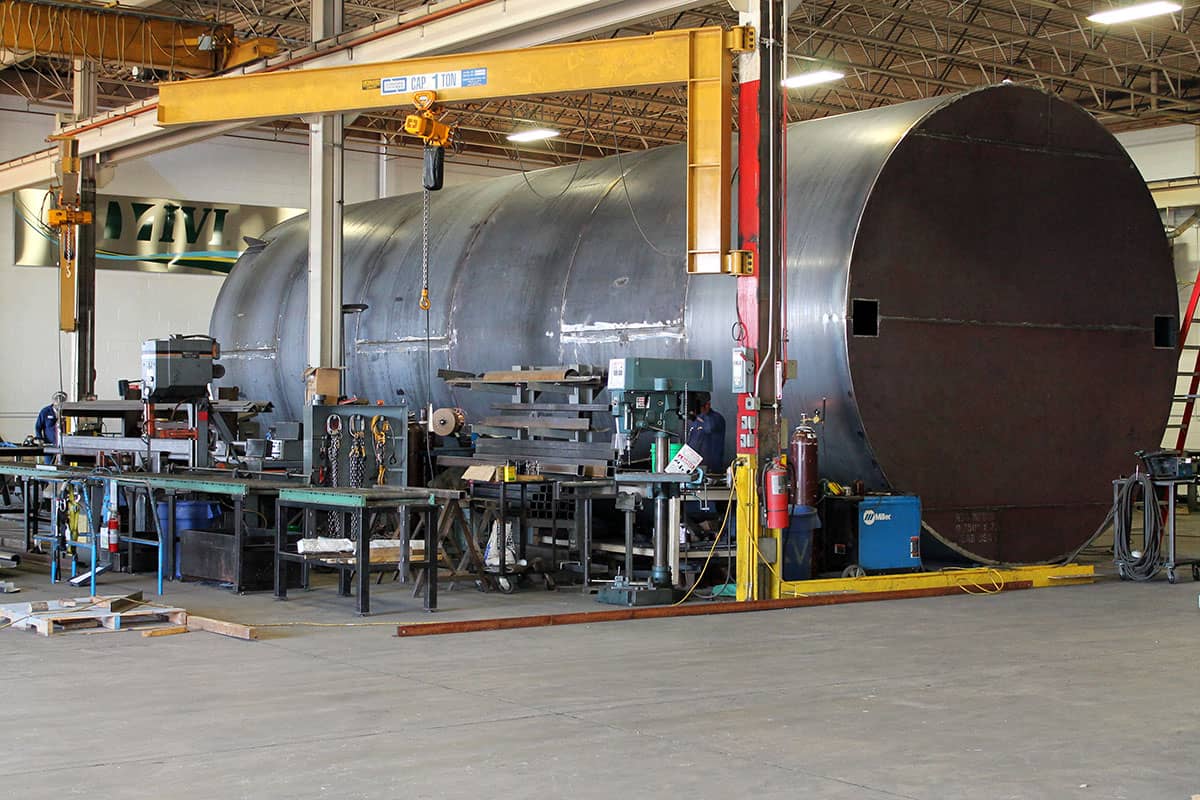
Compliance with these standards not only mitigates threats associated with leaks and failings however likewise improves the overall track record of suppliers within the industry. Normal audits and assessments are frequently called for to verify adherence to these policies, stressing the relevance of maintaining rigid quality assurance throughout the manufacturing process. Ultimately, understanding and carrying out these regulations is important for any type of company intending to generate reliable and risk-free storage space solutions.
High Quality Assurance Processes
A robust quality control process is essential in the manufacturing of storage tank, functioning as a framework to support market requirements and specs. This process encompasses several critical points, including material option, layout recognition, manufacturing procedures, and last evaluations. Each phase is regulated by recognized standards, such as the American Society of Mechanical Engineers (ASME) and the American Oil Institute (API), which determine the minimal requirements for quality and safety.
During product choice, only accredited and examined products ought to be made use of, assuring structural honesty and resistance to rust. Design validation entails extensive engineering assessments to confirm that the storage tank can withstand functional problems, consisting of pressure and temperature level variants.
Manufacturing treatments need to be thoroughly recorded and followed to ensure regular high quality. This consists of welding methods, joint examinations, and non-destructive testing (NDT) methods to determine any type of potential problems early at the same time. Lastly, extensive evaluations and testing of the finished item are crucial to validate conformity with regulatory requirements.
Implementing a strenuous high quality guarantee procedure not only enhances product reliability but likewise safeguards against potential failings, ultimately shielding both the setting and public safety and security.
Kinds Of Storage Tanks
In the domain of storage tank manufacturing, understanding the various kinds of containers is necessary for conference details industry demands. This discussion will certainly cover an overview of container products, typical design variants, and specialized applications customized to diverse operational needs. By taking a look at these elements, producers can assure peak efficiency and compliance with top quality requirements.
Tank Products Introduction
Tank are crucial frameworks for the secure control of different fluids and gases, and their materials greatly affect both efficiency and longevity. The option of material influences not only the architectural honesty but also the compatibility with the saved contents, resistance to environmental aspects, and general maintenance requirements.
Usual products for storage tank consist of carbon steel, stainless steel, fiberglass-reinforced plastic, and concrete. Carbon steel is commonly utilized due to its strength and cost-effectiveness, making it suitable for a range of applications, although it might call for protective layers to avoid corrosion. Stainless-steel offers boosted rust resistance and is excellent for keeping hostile chemicals or food.
Fiberglass-reinforced plastic is light-weight, corrosion-resistant, and appropriate for below ground setups, yet it might not withstand heats as properly as steel tanks. Concrete tanks are sturdy and usually used for massive storage, specifically for water, but they can be susceptible to fracturing and require careful style to minimize leak.
Selecting the proper material is important to making certain security, conformity with policies, and reducing long-lasting operational expenses in storage tank manufacturing.
Typical Design Variations
Recognizing the different design variants of storage tank is necessary for enhancing capability and efficiency in their desired applications. Tank can be categorized into a number of kinds based upon their style, materials, and planned use.
One usual type is the vertical storage tank, which takes full advantage of the surface area for fluid storage space while reducing the impact. These containers are often utilized for water, chemicals, and fuels. On the other hand, horizontal storage tank are developed for bigger volume capacities and are often made use of in commercial applications where space is restricted.
Additionally, double-walled storage tanks provide an additional layer of safety and security by decreasing the threat of leaks, making them suitable for hazardous substances. Specialized layouts such as round or rectangle-shaped storage tanks are tailored to specific needs, influencing elements like stress resistance and simplicity of accessibility for upkeep.
In addition, differing container arrangements, such as flat-bottomed or conical layouts, influence drain effectiveness and overall capability. Each design variant serves distinct purposes, stressing the relevance of picking the proper type based upon the certain storage requirements and environmental considerations.
Specialized Tank Applications
Numerous storage tank layouts cater to particular requirements and applications, highlighting the relevance of customized services in the industry - Texas Oilfield Storage Tank Company. Specialized storage tank applications are crucial in markets such as oil and gas, chemicals, water therapy, and food storage, where distinct needs dictate design attributes and materials
Double-walled storage tanks are necessary for unsafe materials, providing an additional layer of security against leaks and ecological contamination. On the other hand, shielded containers are created for temperature-sensitive products, making certain that contents continue to be stable during storage space. In addition, underground storage tank (USTs) are frequently used for oil items, needing strict regulative compliance and corrosion-resistant products.
Furthermore, vertical storage tanks are frequently utilized in space-constrained environments, while straight containers promote easier transportation and installment - Oil & Gas Storage Tank Fabrication. Containers made for certain chemicals may use customized finishings to stop corrosion and deterioration, making sure durability and integrity
The choice of the appropriate storage tank kind is essential for functional performance and safety and security. Comprehending these specialized applications website link help manufacturers and users in making educated choices, ultimately bring about improved performance and compliance in numerous industries. Customized remedies not only address special difficulties but also boost total job results.
Effect on Safety and Compliance
The integrity of storage tank manufacturing directly influences security and compliance criteria across sectors. Top notch manufacturing procedures guarantee that storage tanks are built to endure the chemical and physical stresses enforced by their components, thereby protecting against leakages, spills, and prospective environmental contamination. Conformity with governing structures, such as the Epa (EPA) and Occupational Security and Wellness Management (OSHA) requirements, is critical. Non-compliance can bring about severe fines and lawful consequences, making quality a non-negotiable element of storage tank production.
Additionally, the choice of products and making strategies plays a vital duty in boosting the sturdiness and safety and security of storage tank. Tanks that surpass or satisfy market standards are less likely to experience structural failings, which can present considerable risks to workers and bordering neighborhoods. Furthermore, regular examinations and adherence to best techniques in quality control are vital for maintaining compliance over the storage tank's operational life expectancy.
Price Effects of Top Quality
Purchasing top quality during the manufacturing of storage tank can significantly affect total prices, both positively and negatively. Top quality products and experienced craftsmanship generally result in greater preliminary expenditures. These investments typically lead to considerable cost savings in the long run. For example, storage tanks produced to stringent quality standards are much less most likely to suffer from rust, leaks, or architectural failings, thereby lowering maintenance and substitute costs.
On the other hand, choosing for lower-quality materials may appear cost-effective initially, however can lead to costly repair services, regulative penalties, and potential operational disturbances. Texas Oil & Gas Storage Tank Fabrication Authority. Companies may additionally face raised responsibility expenses connected with mishaps arising from subpar storage tanks, which can drastically impact their monetary standing and track record
Additionally, high-grade storage tank can enhance functional performance, optimizing storage capacity and reducing downtime. This effectiveness equates right into better source monitoring and general earnings.
Long-Term Performance Conveniences
Durability works as a foundation in the lasting performance of storage tank, significantly affecting their operational dependability and life expectancy. Top quality manufacturing warranties that containers are built from durable products, efficient in withstanding different ecological stress and anxieties, consisting of temperature level changes, rust, and physical effects. This durability considerably minimizes the possibility of leaks and structural failings, which can bring about costly downtime and ecological risks.
High quality manufacturing procedures integrate detailed screening and evaluation protocols, guaranteeing that every tank meets stringent market criteria. This attention to information not just enhances the tank's integrity but additionally promotes self-confidence among drivers regarding its efficiency gradually. A well-manufactured tank calls for much less constant repair and maintenance, equating into reduced functional expenses and raised productivity
Additionally, the long life of storage tank minimizes the demand for premature replacements, hence maximizing lifecycle prices. Purchasing high-quality storage tank, as a result, is not just an issue of instant expense however a critical choice that pays dividends in operational efficiency and safety. Inevitably, the long-term efficiency advantages of high quality manufacturing prolong beyond the item, boosting business credibility and conformity with governing demands.
Assessing Manufacturers and Suppliers
Evaluating manufacturers of storage tank is a critical action in ensuring quality and integrity. The selection procedure ought to start with a comprehensive analysis of their sector experience and online reputation. Established producers with a proven track record often tend to comply with stringent high quality standards and have a history of successful tasks.
Next off, it is vital to check out accreditations and conformity with appropriate market laws, such as API, ASME, or ISO criteria. These accreditations not just indicate adherence to high quality however additionally mirror a dedication to safety and security and environmental factors to consider. Additionally, it is beneficial to assess client testimonies and instance research studies to evaluate fulfillment degrees and the total performance of the containers provided.
In addition, consider the variety of products and technologies used by the producer. Ingenious solutions and remarkable products can considerably affect the durability and effectiveness of storage tank. Ultimately, examine the level of consumer support and after-sales solution supplied. Receptive interaction and technical aid can improve the long-term relationship between you and the distributor, guaranteeing that any kind of concerns are immediately resolved. This thorough evaluation procedure will assist protect a collaboration that focuses on high quality and dependability in storage tank manufacturing.
Frequently Asked Questions
What Materials Are Typically Used in Storage Tank Manufacturing?
Typical products made use of in storage tank manufacturing include carbon steel, stainless-steel, fiberglass, and polyethylene. Each product offers unique benefits regarding toughness, corrosion resistance, and viability for certain applications, boosting total storage tank efficiency and durability.
-1.jpeg?width=2000&height=1179&name=storage%20tanks%204(2)-1.jpeg)
How Do Environmental Elements Impact Storage Tank Quality?
Environmental variables, such as temperature level variations, humidity, and exposure to corrosive compounds, significantly influence storage tank quality. These problems can bring about product degradation, architectural weak points, and eventually jeopardize the container's integrity and operational performance.
What Certifications Should I Seek in Storage Tank Manufacturers?
When choosing storage tank manufacturers, prioritize certifications such as ISO 9001 for high quality management, API criteria for industry compliance, and UL listings for safety and security guarantee. These accreditations indicate adherence to extensive manufacturing and safety methods.
Just How Frequently Should Storage Tanks Be Checked for High quality?
Tank need to be inspected at the very least yearly to assure compliance with safety and security requirements and operational integrity. Regularity may raise based on usage, ecological conditions, and governing demands, requiring a customized assessment timetable for peak performance.
What Are Usual Quality Assurance Tests for Storage Tanks?
Common high quality control examinations for storage tank consist of aesthetic evaluations, non-destructive testing (such as ultrasonic and radiographic), stress screening, and product composition analysis, ensuring structural stability, leakage prevention, and compliance with market requirements for safety.
In the domain name of storage space container manufacturing, understanding the numerous kinds of containers is essential for conference particular sector requirements. One typical kind is the vertical storage space tank, which takes full advantage of the surface area for liquid storage space while minimizing the footprint. In addition, upright storage tanks are commonly employed in space-constrained environments, while straight containers help with less complicated transportation and installation. Spending in quality during the manufacturing of storage space containers can considerably impact overall expenses, both favorably and negatively. High-grade storage tanks can boost functional efficiency, making best use of storage capacity and lessening downtime.